↑ Chapter One Contents · All Chapters
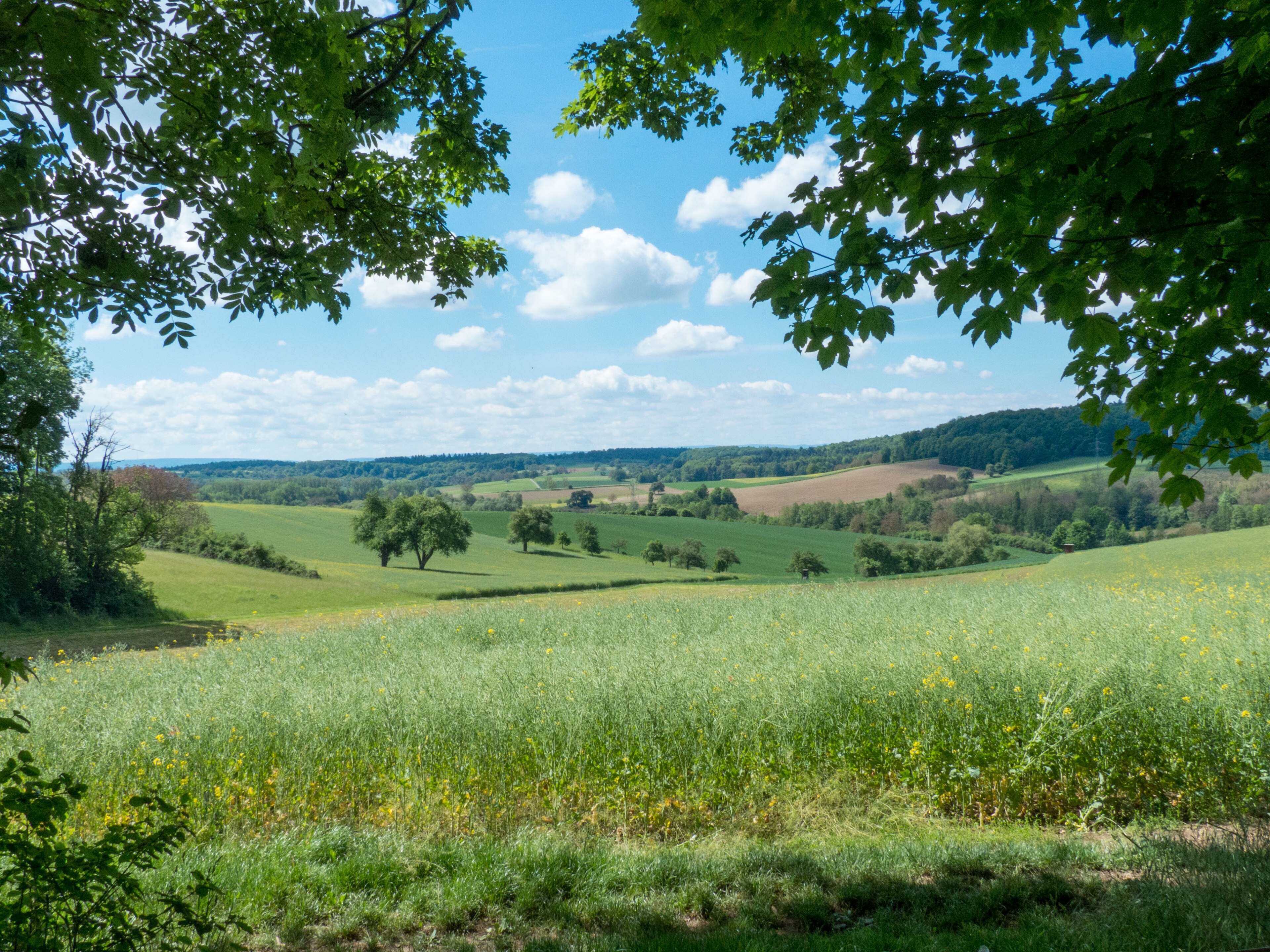
Rolling farmlands, Kraichgau-Landschaft, Germany. Photo: Besenbinder, Wikimedia Commons.
The Kraichgau is a gentle country. The hills are rounded, the valleys wide enough for fields, the streams reliable. Villages have occupied these slopes since the early Middle Ages. By the early 17th century, Ittlingen and its neighbors — Neidenstein, Sinsheim, Gemmingen — were established Lutheran communities with their own churches, civic records, and rhythms of planting and harvest.
The Thirty Years' War ended those rhythms. The war began in 1618 and did not stop until 1648, and by then the Kraichgau had been burned, looted, and stripped of so many of its people that recovery took generations. Only six church records from before 1650 survive among the villages of the region, genealogist Annette Kunselman Burgert noted in her landmark 1983 study.12 In Ittlingen specifically, Burgert wrote, "only the stump of the church tower remained."
Gustav Neuwirth, whose 1981 civic history of Ittlingen drew on decades of archive work at the Generallandesarchiv Karlsruhe, put the resettlement plainly: the old-established population had been "greatly depleted" after the war, and "replacement was found in immigrants from Switzerland or from the reserves of demobilized soldiers of various national backgrounds."13 New families took up the devastated farmsteads, attached their names to them, and began again.
The Kraichgau had barely begun to rebuild when France struck again. In 1689 — the very year John Adam Romich was born in nearby Neidenstein — French forces swept through the Palatinate in what historians call the Nine Years' War. Villages burned. The harvests replanted with such effort
He would spend 43 years rebuilding a life there before deciding that somewhere else might be better.