↑ Chapter One Contents · All Chapters
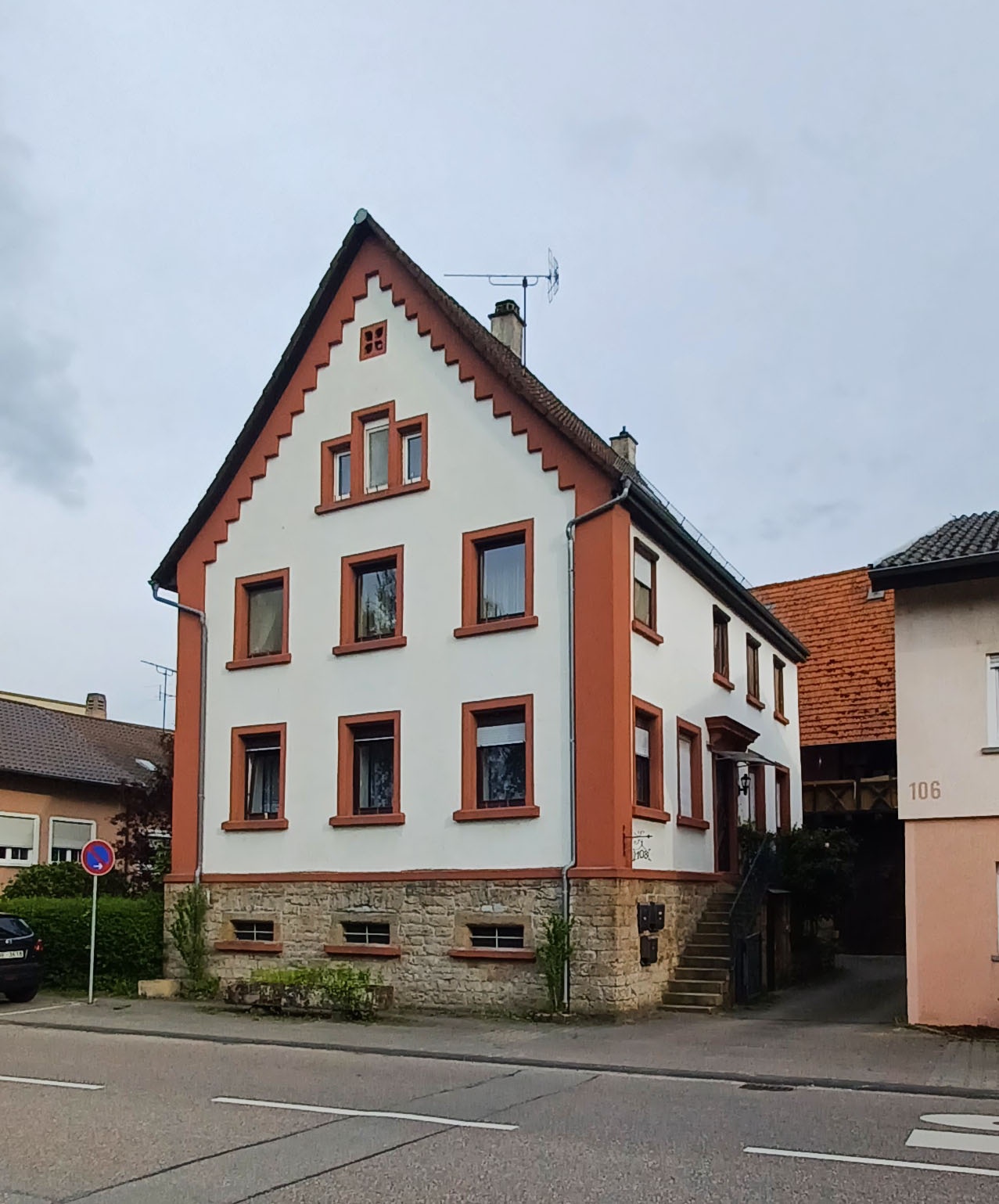
The Romig house in Ittlingen, Germany. Photograph by Joan Reed.
The house is still there. It sits across the street from the Rathaus in Ittlingen, a small town in the rolling Kraichgau hills of what is now Baden-Württemberg in southwestern Germany. It does not announce itself. The building is attached at the rear to another structure — the old barn, now absorbed into town — in the T-shaped arrangement typical of German farmsteads that were once on the village edge and are now swallowed by streets. It looks like nothing in particular.
In August 1999, a California woman named Joan Romig Reed stood in front of it and took a photograph.
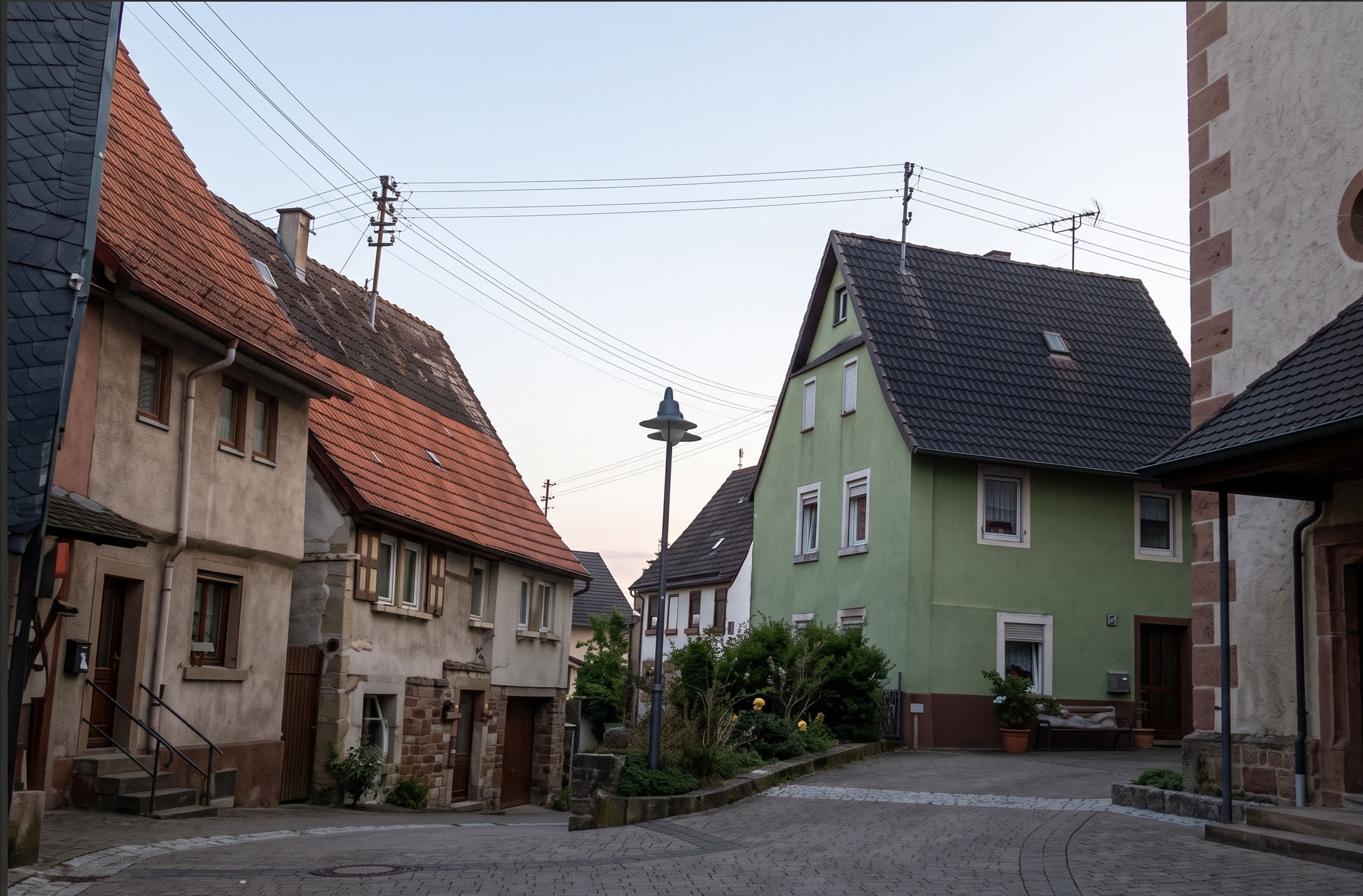
Street in Ittlingen as it appeared in 1999. Photograph by Joan Reed.
Joan had been to Ittlingen before, two years earlier, as part of a larger family research trip. She had come back now with two cousins she had met only through genealogy correspondence — Jeff Romig from Washington, D.C., and Carolyn Beckwith from Boston — all three of them strangers in person, all of them connected through a name that had been splitting into branches since 1732. They had spent the day with two elderly women: sisters, both in their early 70s, both unmarried, both named Romich. Both descendants of the family that had never left.
"They both never married and have always lived together," Joan wrote afterward in an email to genealogist Karla Tipton. "They lived in Heidelberg during the week and came 'home' to Ittlingen on weekends. This went on for 50 years."
The sisters had retired to a house their parents built on the edge of town, overlooking the valley. They showed Joan the view. They laughed a lot. Before she left, Joan walked back across to photograph the old house near the Rathaus — the one where, the sisters told her, all of John Adam Romich's children had been born.
"They are the last of their line," Joan wrote. "Bummer."
Whether that house is the original one the Romigs lived in is no longer certain. In May 2026, Tipton wrote to the Ittlingen Heimatverein — the local heritage society — asking about the family's property. In his reply, the society's chairman, Michael Hauk, was careful. "Judging by the architectural style, it was built in the 19th century," he wrote of the house. "We have no knowledge as to whether this is the original ancestral home of the Romig family. Records regarding predecessor buildings or previous residents do not exist."1
Joan, when told, was not surprised. She recalled something else: a woman at the town hall, during her first visit in 1995, had pointed to the house directly across from the Rathaus as the Romich house. "Then to the west across the street was the Bernhardt house," Joan wrote in 2026, "where the wife of J. Adam was from."2
The house standing today may be a 19th-century successor to something older. But the street is the same. The square is the same. The Romig name is attached to a named farmstead — the Romigshof — that the civic records of Ittlingen document across two centuries.
This is where the story begins. Not with a ship manifest or a Pennsylvania deed, but with a street in a German town where two families once lived side by side — the Romichs and the Bernhardts — and where two very different futures diverged: one line that sailed away in 1732, and one that did not.